Financial Times Highlights GS Architecture’s Fabric-First Approach to Sustainable Cooling
June 2026
As the UK experiences more frequent and intense heatwaves, keeping homes comfortable without increasing carbon emissions is becoming a major challenge. A recent Financial Times House & Home feature, “Anti-aircon? How to stay cool sustainably”, explores architectural strategies that reduce overheating while supporting long-term sustainability. The article features GS Architecture’s award-winning Hampstead Passive House retrofit as an example of adapting existing homes for a warmer future.
Designing for a Changing Climate
The article notes that most UK homes could be at risk of overheating by 2050 without significant intervention. While air conditioning is becoming more common, the Financial Times highlights the importance of passive design measures that reduce the need for mechanical cooling.
These include:
- Improving insulation and thermal performance
- Reducing solar gain
- Enhancing natural ventilation
- Using materials with greater thermal mass
- Retrofitting existing homes to perform better year-round
These principles underpin GS Architecture’s approach to sustainable retrofit.
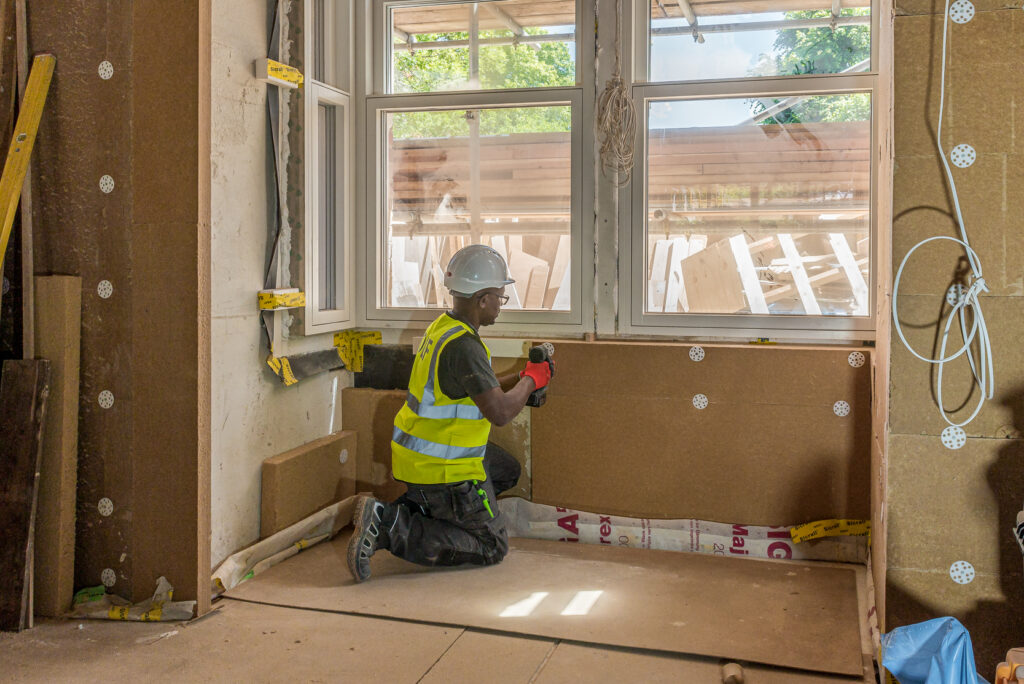
Wood fibre insulation installation
Hampstead Passive House: A Fabric-First Retrofit
The Financial Times features GS Architecture’s Hampstead Passive House, a deep retrofit of a Victorian semi-detached home in North London designed to improve comfort while reducing energy consumption.
The project incorporates wood-fibre insulation, chosen for its natural properties and higher thermal mass, helping to minimise overheating in summer while reducing heat loss in winter. An existing glazed conservatory is replaced with a timber-framed extension featuring a green roof and triple-glazed windows, significantly reducing solar gain.
The project demonstrates how targeted improvements to a building’s fabric can enhance performance without relying heavily on energy-intensive cooling systems.
Why Fabric First Matters
While many homeowners look to air conditioning as temperatures rise, GS Architecture advocates improving the building itself first. Measures such as insulation, airtightness, shading and high-performance glazing can deliver lasting improvements in comfort and energy efficiency.
Although these upgrades require upfront investment, they provide long-term benefits and become increasingly important as overheating emerges as a mainstream design concern across the UK.
Passive Cooling Before Mechanical Cooling
A key message of the Financial Times feature is that preventing heat from entering a building is often more effective than removing it later. The article highlights growing interest in external shading, natural ventilation, thermal mass and climate-responsive design.
GS Architecture integrates these passive cooling strategies into both retrofit and new-build projects, helping clients achieve greater comfort, lower energy use and improved resilience to future climate conditions.
Looking Ahead
The Financial Times concludes that no single solution addresses overheating. Passive measures, building upgrades and efficient mechanical systems all have a role to play.
At Hampstead Passive House, a roof-mounted solar array generates around 60% of the home’s annual energy demand, demonstrating how renewable energy can complement fabric-first design.
As climate change reshapes how we design and retrofit buildings, projects such as Hampstead Passive House show that sustainable cooling starts with the building itself. By improving insulation, reducing solar gain and prioritising passive design, existing homes can become more comfortable, energy efficient and better prepared for the decades ahead.
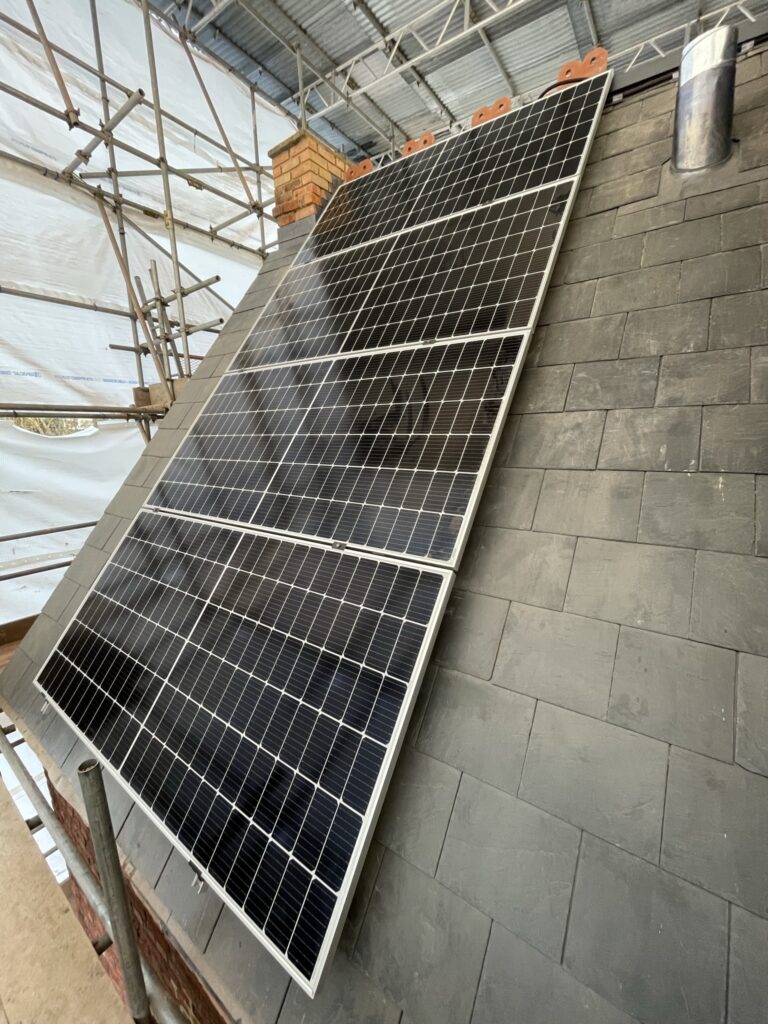
Photovoltaic Panels
To read the full FT Weekend article, click here!