What is the difference between airtightness and breathability and what does either have to do with sustainabilty?
Airtightness refers to how well a building prevents uncontrolled air leakage through gaps, cracks, or unsealed joints in the building envelope (walls, roofs, floors, windows, etc.).
Why it’s important:
- Reduces heat loss in winter and heat gain in summer.
- Improves energy efficiency—less heating and cooling required.
- Prevents drafts and cold spots.
- Enhances indoor air quality when combined with controlled ventilation (like MVHR systems).
- Protects against moisture damage from warm air condensing in walls and roofs.
Breathability refers to how well building materials allow the diffusion of water vapour (not air) through the building fabric.
Why it’s important:
- Helps prevent moisture buildup inside walls, floors, and roofs.
- Reduces the risk of mould, rot, and material degradation.
- Supports healthy indoor air quality and comfort.
- Allows buildings to “dry out” naturally after exposure to humidity or minor leaks.
Examples of breathable materials:
- Lime plaster
- Wood fibre insulation
- Clay renders
- Hempcrete
- Certain membranes (vapour-open but airtight)
How they work together in sustainable homes
- Airtightness blocks unwanted air from leaking in/out.
- Breathability allows water vapour to move through materials safely.
- Airtightness is achieved with membranes, tapes, seals, and good detailing.
- Breathability is achieved with vapour-open, hygroscopic (moisture-absorbing) materials.
- Airtightness is essential for energy efficiency.
- Breathability is essential for moisture control and material health.
- Airtightness requires mechanical ventilation to bring in fresh air.
- Breathability helps walls dry naturally, even if slightly wet.
A sustainable building should be both airtight and breathable.
You want to control air movement while still allowing vapour to diffuse—think of it like wearing a waterproof yet breathable jacket (like Gore-Tex): it stops wind and rain but still lets sweat escape.
How airtightness and breathability were achieved in the Hampstead EnerPHit
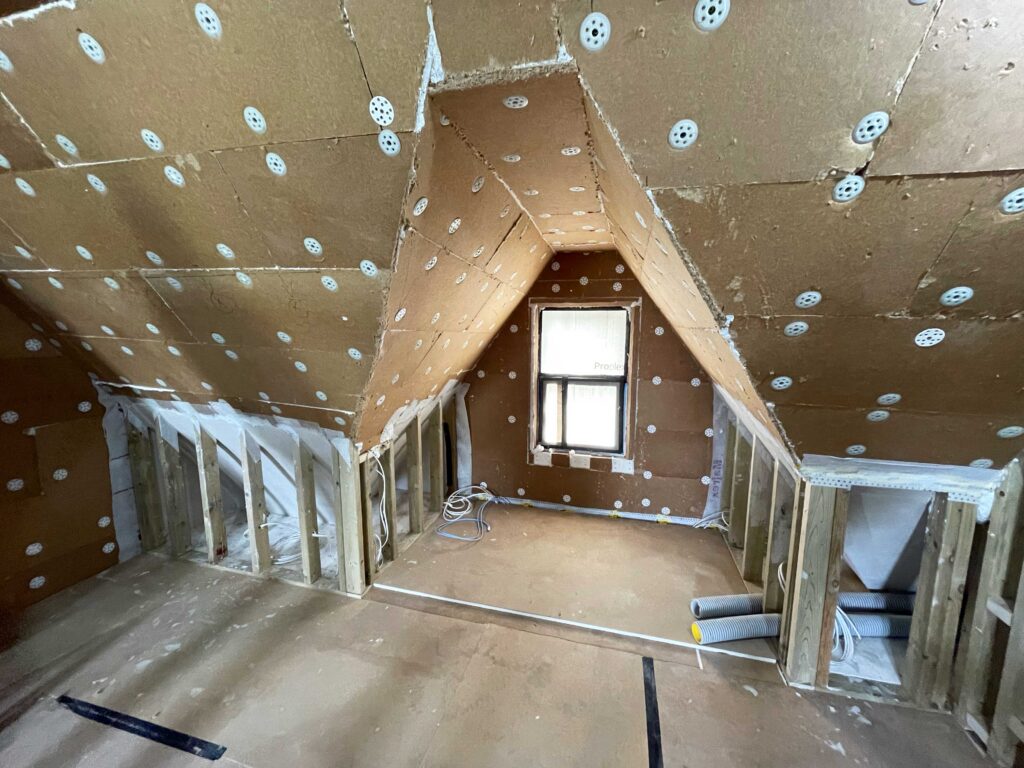
A parge coat of thermalime was applied to the inside of the existing brick walls to provide a flat surface for wood fibre insulation to be fixed with staggerd joints.
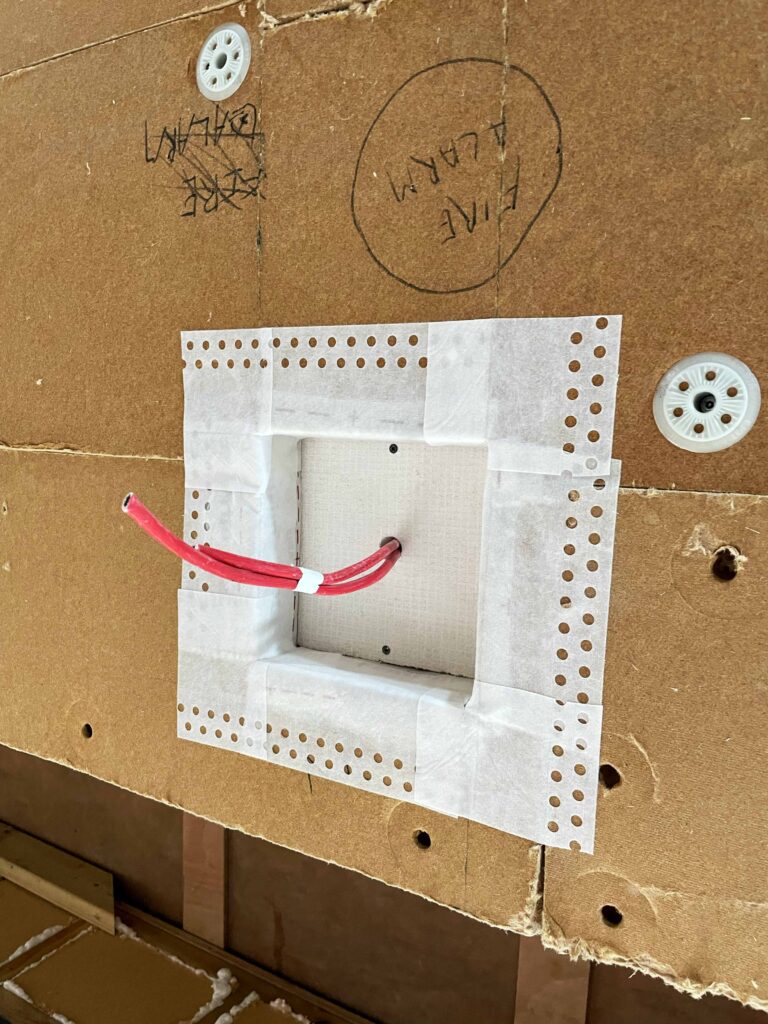
Cut-outs for electrical back boxes and other perforations in the insulation were taped to allow for a continuous airtightness, when the lime plaster was applied.
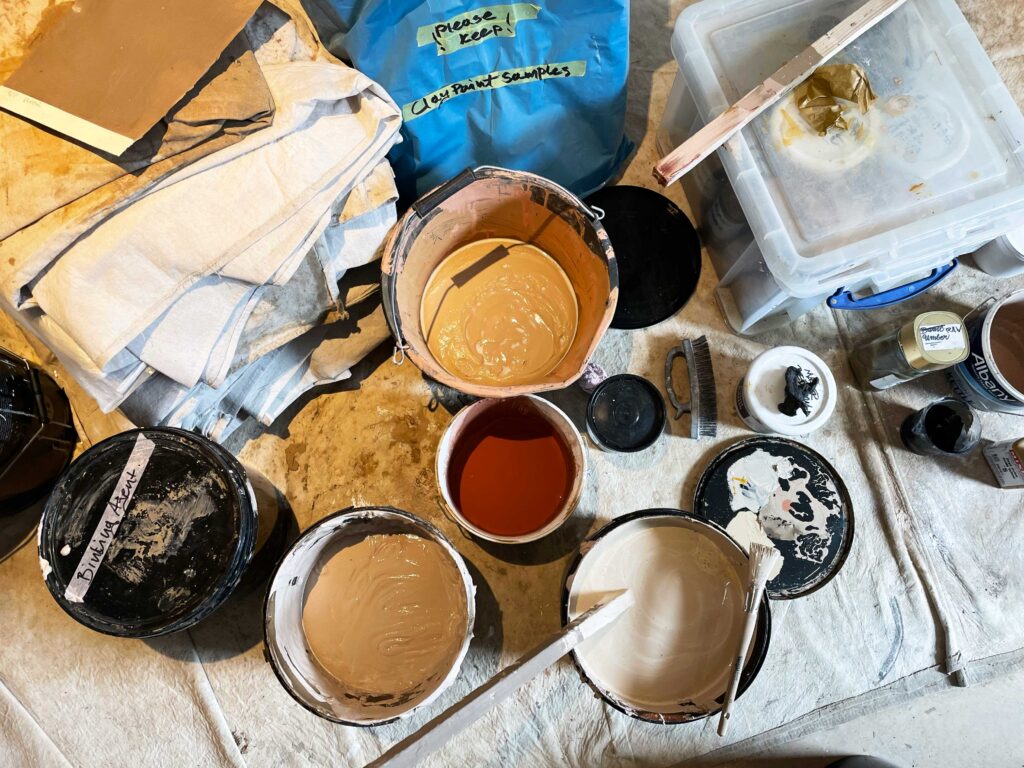
Lime paint was mixed with pigments for application over the lime plaster.